The Liquidity Scale: How High Trading Volume Prevents Flash Crashes and Gaps
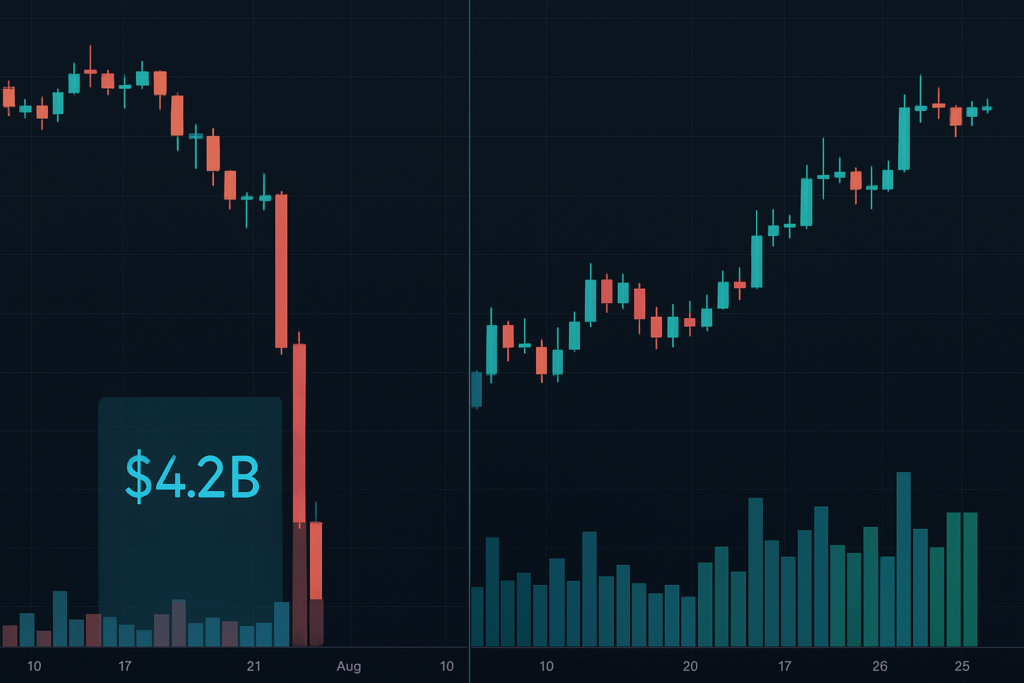
Watching a live currency chart can feel reassuring when price ticks smoothly from one micro-level to the next. But have you ever seen a chart suddenly leap ten or twenty pips instantly, leaving an eerie vertical line or an empty void behind? These abrupt disruptions are structural symptoms of the market’s liquidity scale in action. Understanding how deep transaction volume acts as an invisible shock absorber is crucial for navigating any sudden market shakeup safely.
What does liquidity actually mean when we talk about a currency market?
Think of liquidity simply as the ease with which you can enter or exit a transaction without disrupting the underlying price. When a market is highly liquid, it means thousands of willing buyers and sellers are matching orders continuously at every single fractional price level. It is very much like a massive, bustling farmer’s market where dozens of vendors are shouting competing prices for the exact same apple. If you want to buy or sell a bushel right now, you can do it instantly because the crowd is dense enough to absorb your trade without anyone blinking an eye.
In the currency world, this transactional density is measured by market depth, which represents the total volume of resting buy and sell orders waiting in the global system. When millions of participants trade simultaneously, the market flows like a deep, calm river.
How does high trading volume stop prices from randomly jumping around?
The sheer volume of matching orders provides a mechanical buffer against sudden price jumps, commonly known as gaps. In a highly populated order book, if a massive institutional player dumps a huge position into the system, the trade encounters layers of resting limit orders. Thousands of smaller bids swallow the massive order piece by piece, slowing down its downward momentum.
Because of this constant friction, price moves smoothly tick by tick rather than leaping wildly across empty zones. If you trade instruments with this kind of thick institutional backstop, your transaction costs drop significantly because highly competitive pricing forces what is a spread in trading down to absolute minimums. Massive volume essentially glues the price action together, preventing the chart from fragmenting into chaotic, unreadable jumps.
What exactly causes a flash crash, and can it happen to major pairs?
A flash crash is a rare, technically driven event where price collapses vertically in seconds and then rebounds almost as quickly. These scary events almost always happen when an unexpected shock occurs during periods of thin trading volume, such as the quiet hour right after the New York market close. When a sudden burst of aggressive selling hits an empty order book, it triggers a chain reaction. Automated algorithms panic, pulling their bids to manage risk, which leaves a complete liquidity vacuum below the market.
Without resting orders to absorb the impact, price falls down a metaphorical elevator shaft until it hits a layer of deep institutional buy orders, causing an immediate snapback. While exotic pairs are most vulnerable due to their low baseline volume, even heavily traded majors can experience brief micro-crashes if algorithmic feedback loops spin out of control when humans are asleep.
Why do we still see price gaps over weekends if the market is so liquid?
The twenty-four-hour forex loop officially pauses for retail participants on Friday evening, but the real world definitely keeps spinning. Over the weekend, major political events, unexpected central bank statements, or geopolitical developments can occur while standard exchange networks are closed. Global institutions continue to reprice risk behind closed doors based on this fresh data.
When the opening bells finally ring on Monday morning, the new consensus price might be miles away from Friday’s closing print. Because no trading business occurred publicly between those two points, the market literally skips those numbers entirely. The chart opens with a physical hole, showing that liquidity cannot protect you when the transaction highway itself is temporarily turned off.
How can I protect my personal capital from these sudden order book vacuums?
Defending your portfolio against these technical disruptions requires proactive risk planning rather than hoping for clear skies. First, make it an unbreakable habit to reduce your exposure or step aside entirely before major, high-impact economic data releases. News drops often cause institutional market makers to step back temporarily, turning a thick market into a fragile, thin one within milliseconds.
Additionally, avoid holding excessive positions over the weekend to eliminate the threat of opening gaps blowing past your risk limits. Think of your position size like the speed of a car; the faster you drive into a foggy patch of road, the less control you have if a sudden obstacle appears. Keeping your leverage low ensures that a rare liquidity pocket will not wreck your account balance.
Does my choice of broker make a difference during chaotic market moments?
Your software’s connection to the global liquidity pool matters immensely when things get wild. When market volume thins out, an average platform might suffer from severe slippage, meaning your stop-loss gets executed at a far worse price than you intended. Partnering with a highly regulated, top-tier operator, like a well-capitalized best cfd broker, protects your execution quality.
High-caliber providers maintain deep, institutional routing lines that pull pricing streams from multiple major global banks simultaneously. This vast backend network ensures that even if one bank pulls its orders during a scare, other quotes remain active to fill your trades fairly. Reliable technology and deep order routing are your best insurance policies against chaotic market anomalies.
Putting Liquidity to Work
Never take continuous chart movement for granted. Always prioritize trading major currency pairs during their peak operational hours when global volume is highest, ensuring that you have an army of buyers and sellers backing your execution. By pairing a deep understanding of market depth with disciplined position sizing, you can insulate your capital from sudden liquidity vacuums and trade with absolute confidence.