Artificial Intelligence and Digital Twins | How Professional Training Is Changing Under Conditions of Uncertainty
Many traditional training programs are built around a predetermined sequence of actions. A student studies the theory, masters a standard procedure, and only then encounters deviations from the norm. However, modern professional activity rarely develops strictly according to a textbook. An industrial plant operator, dispatcher, driver, healthcare worker, or security officer often has to act under conditions of limited time and contradictory information.
Simulation systems are valuable because they make it possible to create uncertainty artificially. Within them, environmental parameters, the speed at which events develop, data availability, and the consequences of decisions can be changed. At the same time, the trainee does not simply memorize the correct answer but develops the ability to recognize a situation, establish priorities, and adjust their behavior.
Artificial intelligence strengthens this process because it can assess the individual characteristics of the user and modify the scenario depending on their actions.
Industrial Digital Twins
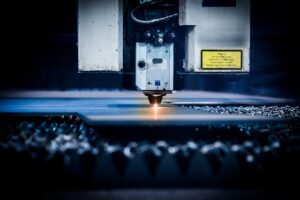
One of the most promising areas is digital twins of industrial facilities. A digital twin is generally understood as a computational model of real equipment or a production process connected to data about its current condition. For educational purposes, such a model can be used to train engineers and operators.
Instead of waiting for an actual malfunction, specialists can study its digital version. For example, the system may show a gradual change in parameters, a disruption of the temperature regime, or the failure of an individual component. The trainee must determine which information is most important, which actions are permissible, and at what point the process needs to be stopped.
From a pedagogical perspective, this creates an environment for learning cause-and-effect thinking. A person sees not only the final result but also the sequence of changes that led to it. If the digital twin is supplemented with AI algorithms, it can automatically select the level of difficulty: showing more pronounced signs of a problem to a beginner and ambiguous and incomplete data to an experienced operator.
Simulation of Transport System Management
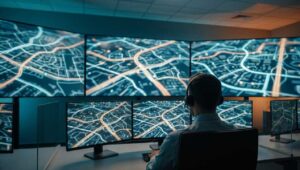
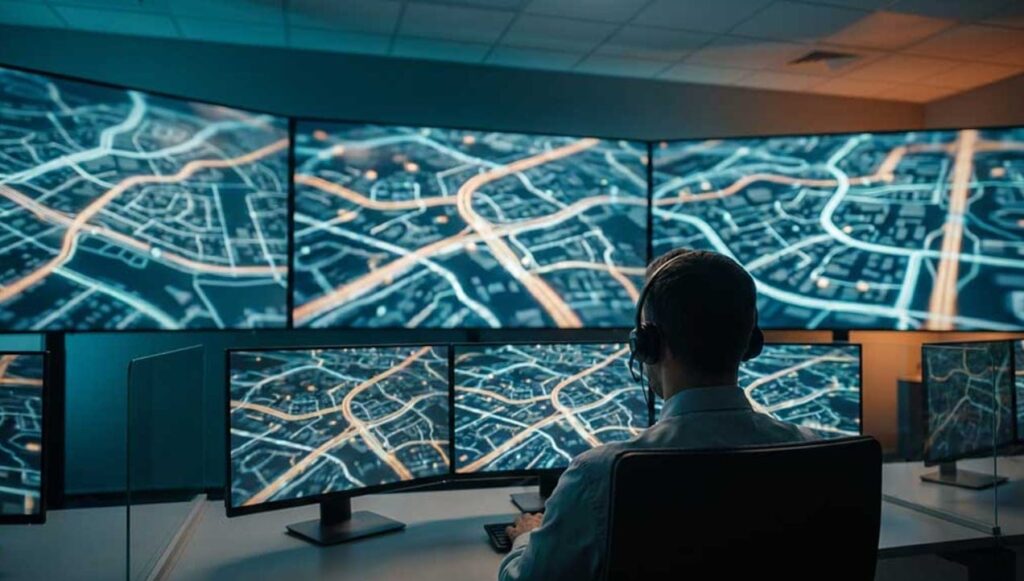
The second example is training simulators for transport operators, including railway dispatch centers, subway systems, and other complex systems. In such areas, one person’s error can affect a large number of participants in the process. Therefore, the training environment must take into account not only technical skills but also communication, workload management, and the ability to work when circumstances change.
An intelligent simulator can reproduce a dense flow of events: route changes, delays, technical restrictions, the receipt of incomplete messages, and the need to coordinate actions with other participants. Unlike an ordinary test, there is not always a single correct sequence here. Sometimes it is necessary to choose a compromise between speed, safety, and system resilience.
The use of artificial intelligence makes it possible to create diverse scenarios in which the same error is not repeated literally. This is important because a person may learn a specific sequence of actions without understanding the principle behind it. Adaptive simulation, by contrast, tests the transfer of a skill to new conditions.
After the training session, the system can generate a report including reaction speed, the number of requests for hints, the quality of attention distribution, and the ability to maintain a sequence of actions as the workload increases. Such data form the basis of a personalized training program.
Shooting Simulator
The third example is a shooting simulator, which can be used to safely practice individual behavioral elements in a simulated environment. In the commercial segment of this equipment, one can find the SHOOTING-SOFT shooting simulator, as well as the VNSH Laser Strike System. At the same time, their technical capabilities and target scenarios may differ, which is why scientific analysis should consider not advertising claims but the general properties of this class of technologies.
A simulator is capable of reproducing visual situations, recording the user’s actions, and providing feedback after the scenario has been completed. In an educational context, this makes it possible to analyze not only the result but also the decision-making process: how quickly a person notices changes, how they respond to ambiguous stimuli, whether they tend to act impulsively, and whether they are able to stop an action when conditions change.
The possibility of safe repetition is particularly important. If certain situations cannot be reproduced frequently in a real-world environment, a digital scenario can be launched repeatedly, with details changed and the user’s behavior compared. In this way, it is not a specific movement that is trained but a more general skill of assessing a situation and following established safety rules.
It should be emphasized that a simulator does not replace legal, theoretical, or practical training. It is an educational tool for a limited range of tasks and must be used under the supervision of a competent instructor.
Limitations of Intelligent Simulations
Despite their advantages, simulations cannot fully reproduce reality. A virtual environment often simplifies tactile sensations, physical fatigue, social pressure, and the unpredictability of the people around us. In addition, an algorithm can train only those scenarios that were anticipated by the developers or generated on the basis of available data.
There is also a risk of excessive reliance on automated assessment. If the system reports that the result was successful, this does not necessarily mean that the user possesses a universal skill. Therefore, digital performance indicators must be interpreted by an instructor who takes into account the context and objectives of the training.
Conclusion
Digital twins and intelligent simulators are changing the very concept of professional training. They make it possible to move from memorizing procedures to studying behavior under conditions of uncertainty. An industrial operator learns to recognize deviations, a transport dispatcher learns to manage conflicting tasks, and a shooting simulator user, accordingly, learns to make safe decisions in a controlled environment.
The potential of such systems is determined not by the impressiveness of the virtual image but by the quality of feedback and the ability to connect actions with consequences. In this sense, artificial intelligence does not become a replacement for the instructor but a tool that makes training more measurable, adaptive, and individualized.