PWA v Native Apps: Choosing the Right Approach for Modern Digital Products
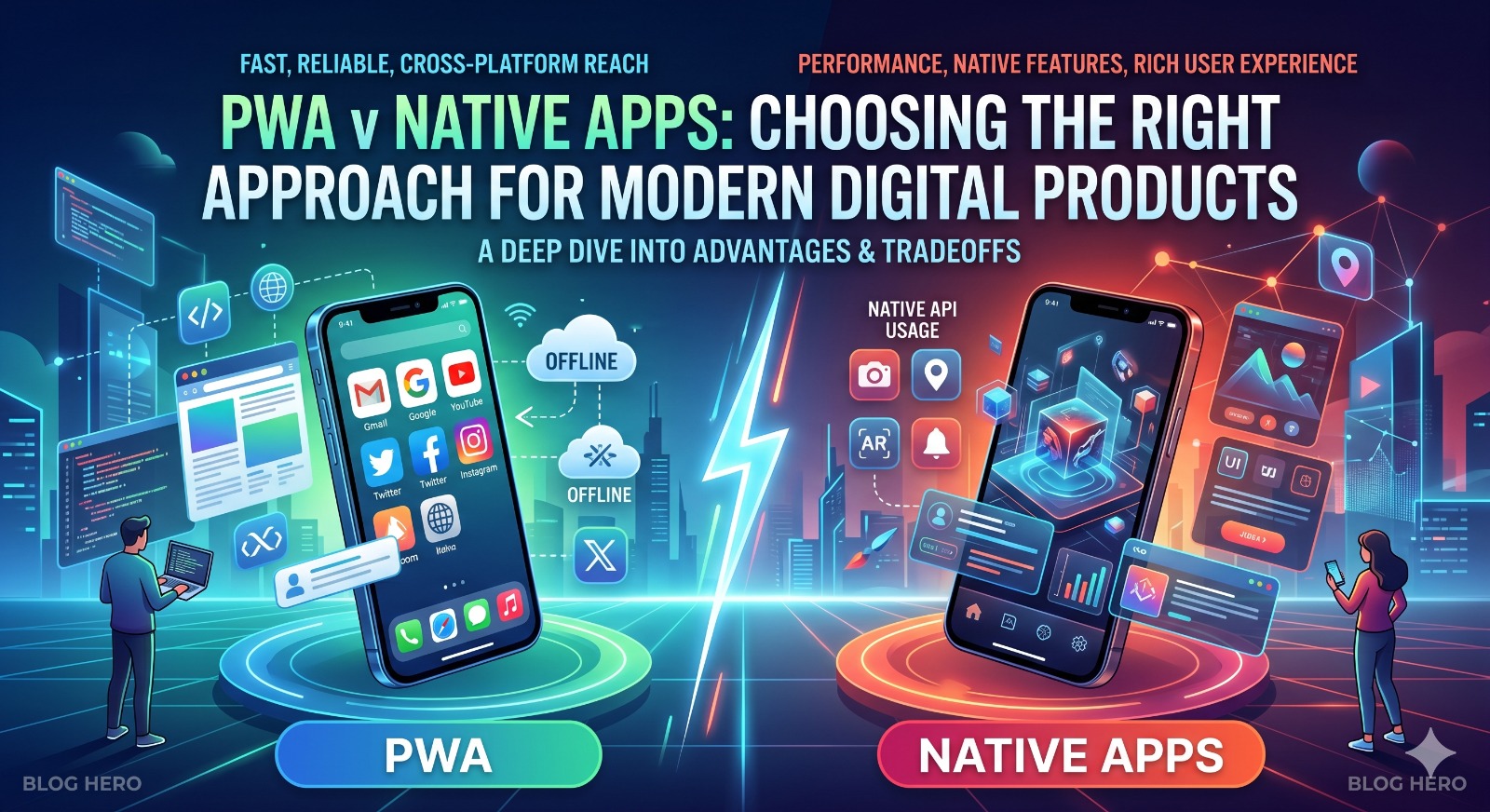
Modern businesses are constantly assessing how to provide fast, scalable, and engaging online experiences across devices. One of the most important product decisions today is understanding PWA vs native apps, as it directly impacts performance, development cost, and user reach.
The decision between PWA vs native apps is not only technical. It defines how users interact with a product, how quickly updates can be deployed, and how efficiently platforms grow across ecosystems.
Understanding PWA vs Native Apps in Modern Development
Both approaches serve different product goals, and selecting the right one depends on business priorities.
Native Apps and Platform-Centric Development
Native applications are developed specifically for operating systems like Android and iOS. This allows better use of device hardware such as GPS, camera, sensors, and background processing. As a result, native apps often provide highly efficient performance for platform-specific use cases.
Progressive Web Apps and Browser-Based Delivery
PWAs work directly in browsers but behave like app-like experiences. They eliminate installation friction and offer instant accessibility through URLs. Features like caching and service workers allow offline access and improved speed under poor network conditions.
Teams working with progressive web app development company solutions often work on building lightweight and scalable applications that prioritize reach and accessibility over deep hardware dependency.
Performance and User Experience Differences
Performance is a key deciding factor when evaluating PWA vs native apps.
Speed and Responsiveness
Native apps generally offer faster performance due to direct hardware access. However, PWAs use caching strategies and optimized rendering to deliver near-native speed in many scenarios.
Installation Experience
PWAs open instantly without installation, making onboarding smoother. Native apps require app store downloads, adding an extra step for users.
Offline Capabilities
Both approaches back offline functionality, but native apps provide deeper system-level offline features, while PWAs rely on browser storage mechanisms.
Development Cost and Maintenance Considerations
Cost structure plays a major role in technology selection.
Native Development Complexity
Native apps require separate codebases for different platforms, increasing both development time and maintenance effort. Every update must go through app store review cycles.
PWA Efficiency Advantage
PWAs use a single codebase that works across devices and platforms, significantly reducing development overhead.
Organizations using mobile app development services often evaluate PWAs when aiming for faster deployment and reduced long term maintenance complexity.
Device Access and Integration Capabilities
Device integration often determines whether PWA vs native apps is the right fit.
Native Apps for Full Hardware Access
Native applications have full access to device features such as Bluetooth, advanced sensors and background services making them ideal for complex hardware heavy applications.
PWAs and Modern Browser APIs
PWAs support several modern APIs like geolocation, camera access, and push notifications, but still have limitations compared to native environments.
Scalability and Deployment Flexibility
Scalability is a major advantage when comparing both approaches.
Native Apps and Platform Fragmentation
Scaling native apps requires maintaining multiple platform-specific versions, which increases complexity as user base grows.
PWAs and Unified Distribution
PWAs are deployed through a single web-based system, making global scaling faster and simpler without dependency on app stores.
This is particularly useful for businesses aiming for rapid user acquisition and low-friction distribution models.
When to Choose PWA vs Native Apps
The right choice depends on product goals rather than technology preference.
Native Apps Are Ideal For
- High-performance gaming applications
- AR/VR experiences
- Heavy device integration use cases
PWAs Are Ideal For
- Content-driven platforms
- E-commerce and retail applications
- Businesses focusing on reach and accessibility
Teams using ui development services often evaluate PWAs for user-centric experiences where speed and accessibility matter more than hardware depth.
Common Challenges in Both Approaches
Each approach has its own limitations that must be considered early.
Native App Challenges
- Higher development and maintenance cost
- Slower update cycles due to app store approvals
PWA Challenges
- Limited access to advanced hardware features
- Browser compatibility differences
Future of PWA vs Native Apps
The gap between PWA vs native apps continues to shrink as browser technologies evolve.
Modern browsers are increasingly offering advanced APIs that reduce the gap between web and native experiences. At the same time, native frameworks are also growing with cross-platform capabilities.
A hybrid approach is becoming more common, where businesses combine both strategies depending on user behavior and product requirements.
Conclusion
The debate around PWA vs native apps is not about selecting a universally superior option, but about choosing what best fits business goals and user expectations. Native apps provide stronger performance and deep device integration, while PWAs offer adaptability, scalability, and quicker deployment. The decision depends on factors such as product complexity, budget, and target audience. For organizations prioritizing reach and accessibility, PWAs provide a strong base for fast and scalable digital experiences across platforms.
Stay in touch to get more updates & news on USA News City!